

















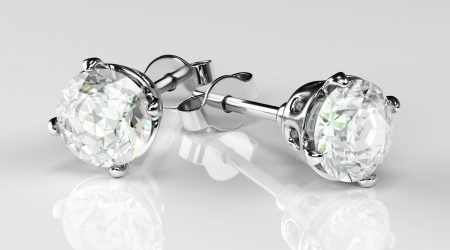


Lab Grown Diamonds
- Round
- Oval
- Cushion
- Pear
- Emerald
- Marquise
- Radiant
- Elongated Cushion
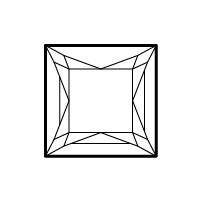
- Princess
- Asscher
- Heart
- Old European
- Old Miner
- Other
This ratio measures how elongated a diamond appears from the top. Essentially, it compares the length of the diamond to its width. Preferences for this ratio vary; some people like a longer, more rectangular shape, while others prefer a closer to square appearance.
Here's a simple example:
- A princess-cut diamond that's 5.05 mm long and 5.00 mm wide has a length-to-width ratio of 1.01, making it look almost perfectly square.
- Square Shapes (Princess, Radiant, Asscher, Cushion): Ideally close to 1.00, which makes them look square.
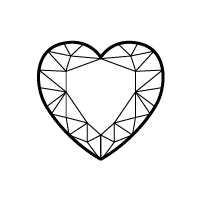
- Heart Shape: Ranges from 0.90 to 1.10, giving a slightly more stretched or compressed look.
- Emerald and Oval Shapes: These are more elongated; Emeralds are typically between 1.30 and 1.40, while Ovals range from 1.30 to 1.70.
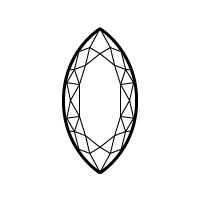
- Pear and Marquise Shapes: Even more elongated; Pears are between 1.45 and 1.75, and Marquises lie between 1.75 and 2.30.
Popular Ratios for Different Diamond Shapes:
This ratio measures how elongated a diamond appears from the top. Essentially, it compares the length of the diamond to its width. Preferences for this ratio vary; some people like a longer, more rectangular shape, while others prefer a closer to square appearance.
Here's a simple example:
- A princess-cut diamond that's 5.05 mm long and 5.00 mm wide has a length-to-width ratio of 1.01, making it look almost perfectly square.
- Square Shapes (Princess, Radiant, Asscher, Cushion): Ideally close to 1.00, which makes them look square.
- Heart Shape: Ranges from 0.90 to 1.10, giving a slightly more stretched or compressed look.
- Emerald and Oval Shapes: These are more elongated; Emeralds are typically between 1.30 and 1.40, while Ovals range from 1.30 to 1.70.
- Pear and Marquise Shapes: Even more elongated; Pears are between 1.45 and 1.75, and Marquises lie between 1.75 and 2.30.
Popular Ratios for Different Diamond Shapes:
This ratio measures how elongated a diamond appears from the top. Essentially, it compares the length of the diamond to its width. Preferences for this ratio vary; some people like a longer, more rectangular shape, while others prefer a closer to square appearance.
Here's a simple example:
- A princess-cut diamond that's 5.05 mm long and 5.00 mm wide has a length-to-width ratio of 1.01, making it look almost perfectly square.
- Square Shapes (Princess, Radiant, Asscher, Cushion): Ideally close to 1.00, which makes them look square.
- Heart Shape: Ranges from 0.90 to 1.10, giving a slightly more stretched or compressed look.
- Emerald and Oval Shapes: These are more elongated; Emeralds are typically between 1.30 and 1.40, while Ovals range from 1.30 to 1.70.
- Pear and Marquise Shapes: Even more elongated; Pears are between 1.45 and 1.75, and Marquises lie between 1.75 and 2.30.
Popular Ratios for Different Diamond Shapes:
This ratio measures how elongated a diamond appears from the top. Essentially, it compares the length of the diamond to its width. Preferences for this ratio vary; some people like a longer, more rectangular shape, while others prefer a closer to square appearance.
Here's a simple example:
- A princess-cut diamond that's 5.05 mm long and 5.00 mm wide has a length-to-width ratio of 1.01, making it look almost perfectly square.
- Square Shapes (Princess, Radiant, Asscher, Cushion): Ideally close to 1.00, which makes them look square.
- Heart Shape: Ranges from 0.90 to 1.10, giving a slightly more stretched or compressed look.
- Emerald and Oval Shapes: These are more elongated; Emeralds are typically between 1.30 and 1.40, while Ovals range from 1.30 to 1.70.
- Pear and Marquise Shapes: Even more elongated; Pears are between 1.45 and 1.75, and Marquises lie between 1.75 and 2.30.
Popular Ratios for Different Diamond Shapes:
- J
- I
- H
- G
- F
- E
- D
This ratio measures how elongated a diamond appears from the top. Essentially, it compares the length of the diamond to its width. Preferences for this ratio vary; some people like a longer, more rectangular shape, while others prefer a closer to square appearance.
Here's a simple example:
- A princess-cut diamond that's 5.05 mm long and 5.00 mm wide has a length-to-width ratio of 1.01, making it look almost perfectly square.
- Square Shapes (Princess, Radiant, Asscher, Cushion): Ideally close to 1.00, which makes them look square.
- Heart Shape: Ranges from 0.90 to 1.10, giving a slightly more stretched or compressed look.
- Emerald and Oval Shapes: These are more elongated; Emeralds are typically between 1.30 and 1.40, while Ovals range from 1.30 to 1.70.
- Pear and Marquise Shapes: Even more elongated; Pears are between 1.45 and 1.75, and Marquises lie between 1.75 and 2.30.
Popular Ratios for Different Diamond Shapes:
- SI2
- SI1
- VS2
- VS1
- VVS2
- VVS1
- IF
- FL
This ratio measures how elongated a diamond appears from the top. Essentially, it compares the length of the diamond to its width. Preferences for this ratio vary; some people like a longer, more rectangular shape, while others prefer a closer to square appearance.
Here's a simple example:
- A princess-cut diamond that's 5.05 mm long and 5.00 mm wide has a length-to-width ratio of 1.01, making it look almost perfectly square.
- Square Shapes (Princess, Radiant, Asscher, Cushion): Ideally close to 1.00, which makes them look square.
- Heart Shape: Ranges from 0.90 to 1.10, giving a slightly more stretched or compressed look.
- Emerald and Oval Shapes: These are more elongated; Emeralds are typically between 1.30 and 1.40, while Ovals range from 1.30 to 1.70.
- Pear and Marquise Shapes: Even more elongated; Pears are between 1.45 and 1.75, and Marquises lie between 1.75 and 2.30.
Popular Ratios for Different Diamond Shapes:
- Good
- Very Good
- Excellent
- Ideal
This ratio measures how elongated a diamond appears from the top. Essentially, it compares the length of the diamond to its width. Preferences for this ratio vary; some people like a longer, more rectangular shape, while others prefer a closer to square appearance.
Here's a simple example:
- A princess-cut diamond that's 5.05 mm long and 5.00 mm wide has a length-to-width ratio of 1.01, making it look almost perfectly square.
- Square Shapes (Princess, Radiant, Asscher, Cushion): Ideally close to 1.00, which makes them look square.
- Heart Shape: Ranges from 0.90 to 1.10, giving a slightly more stretched or compressed look.
- Emerald and Oval Shapes: These are more elongated; Emeralds are typically between 1.30 and 1.40, while Ovals range from 1.30 to 1.70.
- Pear and Marquise Shapes: Even more elongated; Pears are between 1.45 and 1.75, and Marquises lie between 1.75 and 2.30.
Popular Ratios for Different Diamond Shapes:
- Very strong
- Strong
- Medium
- Faint
- None
This ratio measures how elongated a diamond appears from the top. Essentially, it compares the length of the diamond to its width. Preferences for this ratio vary; some people like a longer, more rectangular shape, while others prefer a closer to square appearance.
Here's a simple example:
- A princess-cut diamond that's 5.05 mm long and 5.00 mm wide has a length-to-width ratio of 1.01, making it look almost perfectly square.
- Square Shapes (Princess, Radiant, Asscher, Cushion): Ideally close to 1.00, which makes them look square.
- Heart Shape: Ranges from 0.90 to 1.10, giving a slightly more stretched or compressed look.
- Emerald and Oval Shapes: These are more elongated; Emeralds are typically between 1.30 and 1.40, while Ovals range from 1.30 to 1.70.
- Pear and Marquise Shapes: Even more elongated; Pears are between 1.45 and 1.75, and Marquises lie between 1.75 and 2.30.
Popular Ratios for Different Diamond Shapes:
- Good
- Very Good
- Excellent
This ratio measures how elongated a diamond appears from the top. Essentially, it compares the length of the diamond to its width. Preferences for this ratio vary; some people like a longer, more rectangular shape, while others prefer a closer to square appearance.
Here's a simple example:
- A princess-cut diamond that's 5.05 mm long and 5.00 mm wide has a length-to-width ratio of 1.01, making it look almost perfectly square.
- Square Shapes (Princess, Radiant, Asscher, Cushion): Ideally close to 1.00, which makes them look square.
- Heart Shape: Ranges from 0.90 to 1.10, giving a slightly more stretched or compressed look.
- Emerald and Oval Shapes: These are more elongated; Emeralds are typically between 1.30 and 1.40, while Ovals range from 1.30 to 1.70.
- Pear and Marquise Shapes: Even more elongated; Pears are between 1.45 and 1.75, and Marquises lie between 1.75 and 2.30.
Popular Ratios for Different Diamond Shapes:
- Good
- Very Good
- Excellent
This ratio measures how elongated a diamond appears from the top. Essentially, it compares the length of the diamond to its width. Preferences for this ratio vary; some people like a longer, more rectangular shape, while others prefer a closer to square appearance.
Here's a simple example:
- A princess-cut diamond that's 5.05 mm long and 5.00 mm wide has a length-to-width ratio of 1.01, making it look almost perfectly square.
- Square Shapes (Princess, Radiant, Asscher, Cushion): Ideally close to 1.00, which makes them look square.
- Heart Shape: Ranges from 0.90 to 1.10, giving a slightly more stretched or compressed look.
- Emerald and Oval Shapes: These are more elongated; Emeralds are typically between 1.30 and 1.40, while Ovals range from 1.30 to 1.70.
- Pear and Marquise Shapes: Even more elongated; Pears are between 1.45 and 1.75, and Marquises lie between 1.75 and 2.30.
Popular Ratios for Different Diamond Shapes:
- GIA
- IGI
- GCAL
This ratio measures how elongated a diamond appears from the top. Essentially, it compares the length of the diamond to its width. Preferences for this ratio vary; some people like a longer, more rectangular shape, while others prefer a closer to square appearance.
Here's a simple example:
- A princess-cut diamond that's 5.05 mm long and 5.00 mm wide has a length-to-width ratio of 1.01, making it look almost perfectly square.
- Square Shapes (Princess, Radiant, Asscher, Cushion): Ideally close to 1.00, which makes them look square.
- Heart Shape: Ranges from 0.90 to 1.10, giving a slightly more stretched or compressed look.
- Emerald and Oval Shapes: These are more elongated; Emeralds are typically between 1.30 and 1.40, while Ovals range from 1.30 to 1.70.
- Pear and Marquise Shapes: Even more elongated; Pears are between 1.45 and 1.75, and Marquises lie between 1.75 and 2.30.
Popular Ratios for Different Diamond Shapes:
This ratio measures how elongated a diamond appears from the top. Essentially, it compares the length of the diamond to its width. Preferences for this ratio vary; some people like a longer, more rectangular shape, while others prefer a closer to square appearance.
Here's a simple example:
- A princess-cut diamond that's 5.05 mm long and 5.00 mm wide has a length-to-width ratio of 1.01, making it look almost perfectly square.
- Square Shapes (Princess, Radiant, Asscher, Cushion): Ideally close to 1.00, which makes them look square.
- Heart Shape: Ranges from 0.90 to 1.10, giving a slightly more stretched or compressed look.
- Emerald and Oval Shapes: These are more elongated; Emeralds are typically between 1.30 and 1.40, while Ovals range from 1.30 to 1.70.
- Pear and Marquise Shapes: Even more elongated; Pears are between 1.45 and 1.75, and Marquises lie between 1.75 and 2.30.
Popular Ratios for Different Diamond Shapes:
This ratio measures how elongated a diamond appears from the top. Essentially, it compares the length of the diamond to its width. Preferences for this ratio vary; some people like a longer, more rectangular shape, while others prefer a closer to square appearance.
Here's a simple example:
- A princess-cut diamond that's 5.05 mm long and 5.00 mm wide has a length-to-width ratio of 1.01, making it look almost perfectly square.
- Square Shapes (Princess, Radiant, Asscher, Cushion): Ideally close to 1.00, which makes them look square.
- Heart Shape: Ranges from 0.90 to 1.10, giving a slightly more stretched or compressed look.
- Emerald and Oval Shapes: These are more elongated; Emeralds are typically between 1.30 and 1.40, while Ovals range from 1.30 to 1.70.
- Pear and Marquise Shapes: Even more elongated; Pears are between 1.45 and 1.75, and Marquises lie between 1.75 and 2.30.
Popular Ratios for Different Diamond Shapes:
This ratio measures how elongated a diamond appears from the top. Essentially, it compares the length of the diamond to its width. Preferences for this ratio vary; some people like a longer, more rectangular shape, while others prefer a closer to square appearance.
Here's a simple example:
- A princess-cut diamond that's 5.05 mm long and 5.00 mm wide has a length-to-width ratio of 1.01, making it look almost perfectly square.
- Square Shapes (Princess, Radiant, Asscher, Cushion): Ideally close to 1.00, which makes them look square.
- Heart Shape: Ranges from 0.90 to 1.10, giving a slightly more stretched or compressed look.
- Emerald and Oval Shapes: These are more elongated; Emeralds are typically between 1.30 and 1.40, while Ovals range from 1.30 to 1.70.
- Pear and Marquise Shapes: Even more elongated; Pears are between 1.45 and 1.75, and Marquises lie between 1.75 and 2.30.
Popular Ratios for Different Diamond Shapes:
Select Your Lab Grown Diamond
- Clear All
- Compare
- Image
- Shape
- Carat
- Color
- Clarity
- Report
- Price
- View
